The sandwich counter worth a detour
Bread, portioning and a disciplined assembly line turn an everyday lunch into something worth seeking out.
By Daniel Reyes · · 6 min read
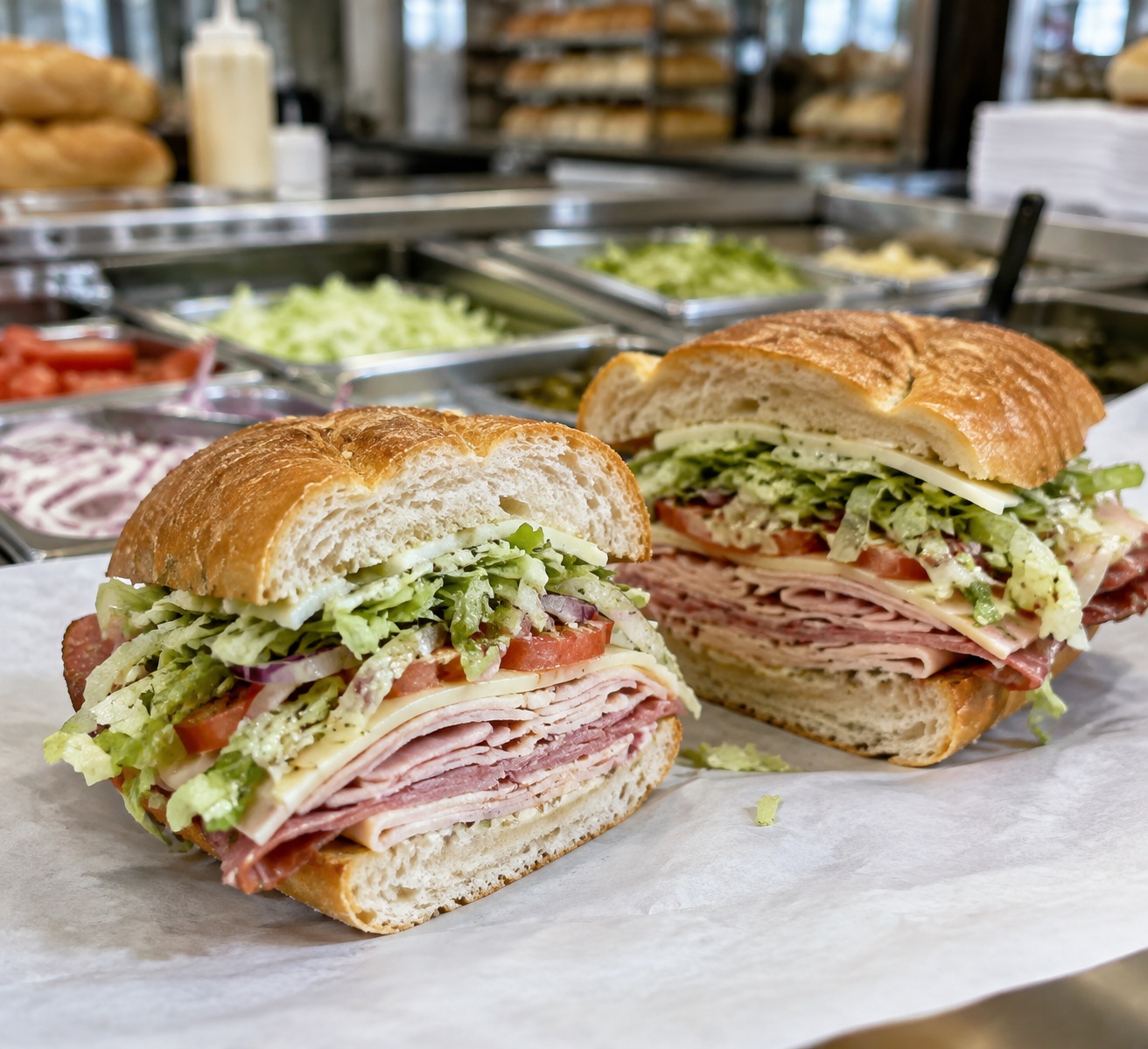
A sandwich counter earns a detour by solving a familiar problem exceptionally well. Lunch needs to arrive quickly, taste complete and survive the trip to wherever it will be eaten. That sounds modest until hot fillings, wet vegetables, crusty bread and a full ticket rail meet at noon. The best counters understand that a sandwich is an assembly problem as much as a collection of good ingredients.
Start with the ordinary order rather than the tallest special. A straightforward sandwich exposes bread quality, seasoning and proportions without elaborate distractions. It should deliver a representative bite early, not require several mouthfuls of empty bread before reaching the filling. Generosity matters, but distribution is what makes generosity useful.
Bread sets the limits
The right bread depends on the filling and the journey. A crusty roll may suit sliced meat and sharp pickles but fight a delicate filling. Soft bread can compress comfortably around fried food yet collapse under too much sauce. An open crumb looks attractive, but large holes offer an easy route for dressing to reach a sleeve.
Freshness is more complicated than softness. Some breads need a firm crust; others should yield almost immediately. Ask whether the bread has the texture the sandwich requires, not whether every loaf feels newly warm. Toasting can add structure and aroma, but heavy toasting may turn an already sturdy roll into something that damages the bite rather than improving it.
A counter should understand its bread yield. Rolls that vary widely in size force staff to improvise portions, while uneven slicing creates a thick bottom and a fragile lid. Consistent purchasing specifications and a sensible cutting method support both eating quality and cost control. Bread is not merely a wrapper bought separately from the rest of the recipe.
Fillings need preparation, not just provenance
Sliced meat should separate cleanly and remain pleasant to chew. Roasted vegetables need seasoning of their own and enough draining to avoid soaking the bread. A chicken salad can taste flat despite expensive ingredients if salt, acid and texture are neglected. Naming a supplier on the menu is useful information, not a substitute for competent preparation.
Temperature should be intentional. Hot fillings need safe handling and a prompt route into the finished sandwich. Cold components need appropriate refrigeration, not a long warm spell beside the toaster. A melted cheese layer can connect ingredients, but cannot guarantee that a thick filling has heated through. The station needs a repeatable method rather than confidence based on surface appearance.
Portioning protects the guest as well as the margin. Scales, measured scoops or counted slices can keep one lunch from being sparse and the next impossible to close. A portion guide should specify usable prepared product, not confuse raw purchase weight with what reaches the bread. Trimming and cooking losses belong in the recipe calculation.
Assembly is a technical skill
Moisture management begins before the first ticket. Tomatoes can be sliced in manageable batches; pickles can be drained; dressed vegetables can be portioned without carrying a pool of liquid. A spread or cheese layer may slow moisture movement into bread, but neither creates a permanent waterproof barrier. The expected holding time still matters.
Layering should distribute contrast. Acid cuts through rich fillings, crisp vegetables interrupt soft textures and a well placed condiment reaches more than one corner. Those elements should not slide out together with the first bite. Overlapping smaller pieces can eat better than stacking a single thick slab that pulls the whole sandwich apart.
Cutting and wrapping finish the engineering. A clean cut makes a large sandwich manageable, while an appropriate wrap helps hold its shape. A hot, crisp sandwich sealed tightly can steam itself soft. A heavily dressed cold sandwich may need better leak protection. Packaging should match the product rather than forcing every order into the same container.
The lunch rush reveals the system
Consider an illustrative counter receiving walk in orders alongside scheduled pickups. If both streams share an unmarked collection point, finished lunches wait while staff repeat names and answer questions. The sandwich maker loses focus, the line appears slower and bread keeps absorbing moisture. A clearly organized handoff can improve food quality without changing a recipe.
Preparation should support that system without turning everything into an advance assembly exercise. Preportioned fillings and stocked tools save movements; finished sandwiches held too long trade away texture. A small menu with shared ingredients can simplify work, provided the choices still feel distinct. Ten variations that require unrelated equipment and garnishes can overwhelm a compact station.
Value includes the last bite
Menu language should make the purchase legible. Bread choice, portion size, included sides and additional charges belong where customers order. An upgrade should provide a clear difference rather than correcting a deliberately incomplete base sandwich. Guests also need a realistic pickup time, especially when a hot sandwich starts deteriorating as soon as it leaves the station.
Judge the result at the end as well as the beginning. Does the final section still contain filling? Has the bread held together without becoming a chore? Is the seasoning balanced after several bites? The counter worth a detour makes those answers predictable. Its craft is not a theatrical stack for a photograph, but a lunch assembled carefully enough to make the next visit an easy decision.