The neighborhood taco worth coming back for
A useful taco starts with its tortilla. A lasting taqueria habit depends on everything that happens around it.
By Daniel Reyes · · 6 min read
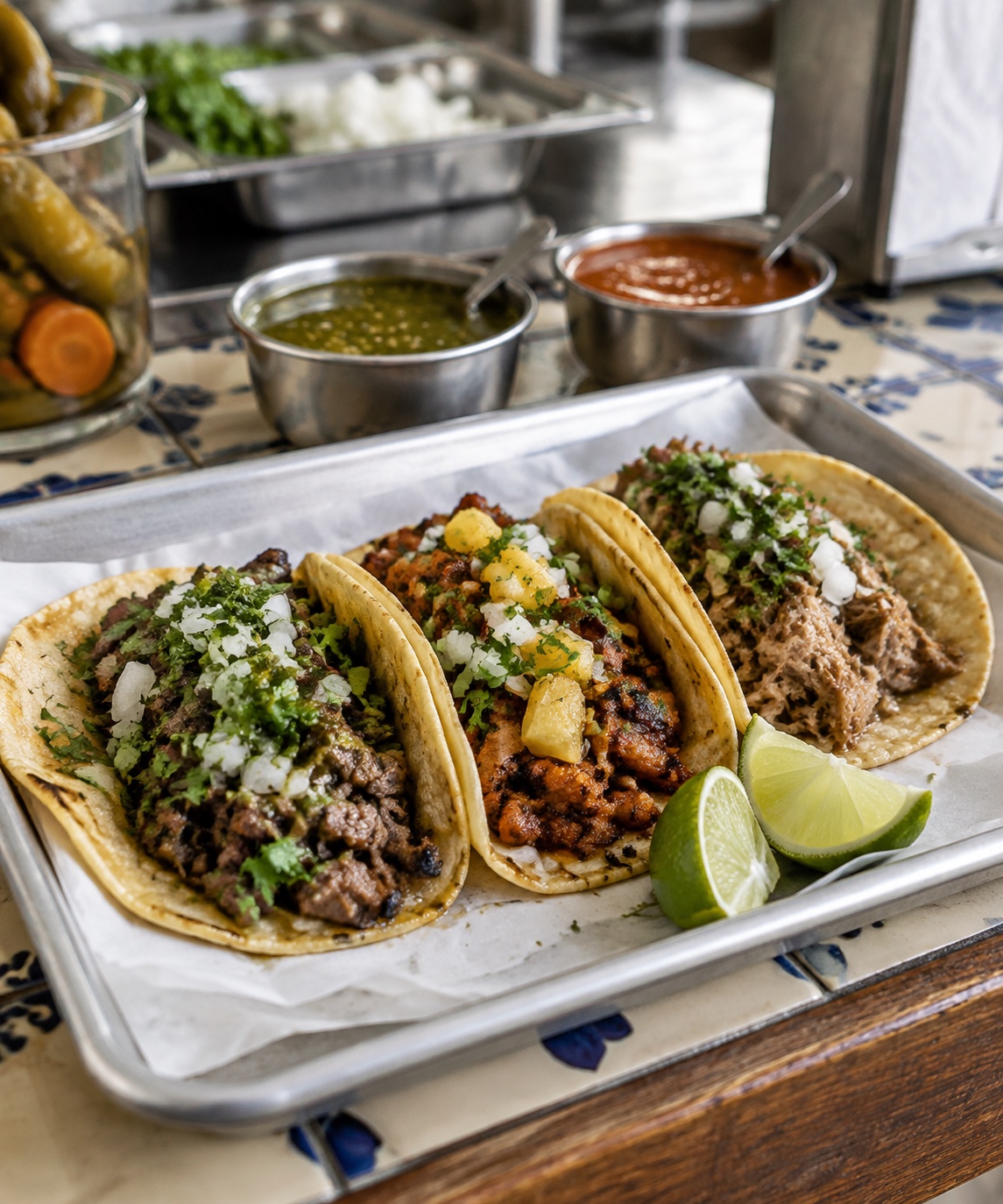
A dependable neighborhood taco has a different assignment from a special occasion meal. It should be compelling enough to crave, affordable enough to repeat and dependable enough that ordering feels easy. A dramatic filling can win attention once. A warm tortilla, balanced salsa and well run counter bring people back. Judging a taqueria means looking at how those parts work together, not searching for one universal version of the perfect taco.
Start with a modest order. Two different fillings reveal more than a crowded platter, particularly if one comes straight from the griddle and another from a braise. Taste each before adding every condiment. The question is whether the kitchen has built a complete bite, and whether the extras improve it rather than rescue it.
The tortilla is the structure
A corn tortilla should taste of corn and bend around its filling without immediately splitting. Fresh pressing can be a pleasure, but handmade is not a guarantee of good cooking. A carefully sourced tortilla heated properly can outperform one made in house and left drying beside the stove. Warmth, moisture and timing matter as much as the production story.
Flour tortillas deserve their own assessment. Depending on the regional style, they may be thin and supple or thicker and tender, with browned spots and a noticeable fat component. They should not taste raw or turn gummy under the filling. Neither corn nor flour is automatically the more serious choice; the useful question is whether it suits what sits inside.
Watch how tortillas move through service. Small batches warmed as orders arrive suggest attention to their short useful window. A covered stack can preserve flexibility, but a long hold can soften or dry tortillas unevenly. Double tortillas may provide welcome strength for a juicy filling. They are not, by themselves, evidence of either generosity or weakness.
What the griddle tells you
The griddle needs room to work. Meat piled into a wet mound tends to steam rather than brown. For a filling intended to have a seared edge, look for distinct browned surfaces and pieces that remain juicy inside. Scraping yesterday’s accumulated bitterness into today’s order is not the same as developing a fresh crust.
Not every filling should be crisp. A braised meat may be best when soft and richly moistened; grilled vegetables need enough cooking to become tender without collapsing. Judge the intended result. A kitchen that treats mushrooms, beans or squash with the same seasoning care as its meat offers more than a token alternative.
Holding is part of the craft. A braise needs protection from drying out, while a crisp filling loses its advantage if it waits beneath trapped steam. The cook’s task is to bring components together near their best moment. An enormous menu can make that harder when ingredients move slowly and every order needs a different setup.
Salsa should give direction
A useful salsa selection offers differences beyond color. Roasted ingredients can bring depth, tomatillos a bright tartness, fresh chiles a green bite and dried chiles a rounder heat. Those descriptions are possibilities, not fixed rules. Ask which salsa complements a particular filling, then add a little and taste before committing the whole taco.
Salt, acid and texture matter as much as heat. A thin salsa may spread through a rich filling; a rougher one can add contrast to something soft. Lime should sharpen flavor, not erase it. Onion and cilantro should arrive fresh enough to contribute crunch and aroma rather than a tired, watery layer.
At a self service station, clean utensils and small, maintained containers matter more than abundance. Temperature control must follow the needs of each preparation and local rules. Diners cannot verify food safety by appearance alone, but dried rims, mixed utensils and neglected spills are reasonable reasons to question how closely the station is being managed.
The arithmetic of a repeat lunch
Value is not simply the largest mound of meat for the lowest price. An overloaded taco can be awkward to eat and poorly balanced, while a smaller one can feel mean if the menu leaves its size unclear. Straightforward portions and clear prices let a guest order enough without guessing. Extras should be explained before the bill arrives.
Consider an illustrative lunch counter with a short queue and a steady stream of pickup orders. Its challenge is not cooking one excellent taco in isolation. It is warming tortillas, finishing fillings and packing orders in a sequence that does not leave the first ticket deteriorating while the last component catches up. A separate pickup spot can protect that rhythm.
What makes it a regular habit
Packaging reveals whether the kitchen understands its own food. A short journey may suit a simple wrap; a longer one may need salsa packed separately and protection against condensation. No container can preserve every texture indefinitely. Honest advice about what travels well is more useful than pretending every taco survives a long delivery equally well.
Return visits test the real proposition: the same portion, a tortilla handled with care, a salsa that tastes intentional and an order that arrives correctly. Friendly recognition helps, but reliable execution does more. The neighborhood taqueria worth keeping is the one that makes an ordinary lunch feel considered without turning it into a project.