What it takes for a steakhouse to get the sides right
Steakhouses are judged on their beef, but the sides reveal how seriously the kitchen takes the whole plate. What getting them right looks like.
By Sofia Marchetti · · 6 min read
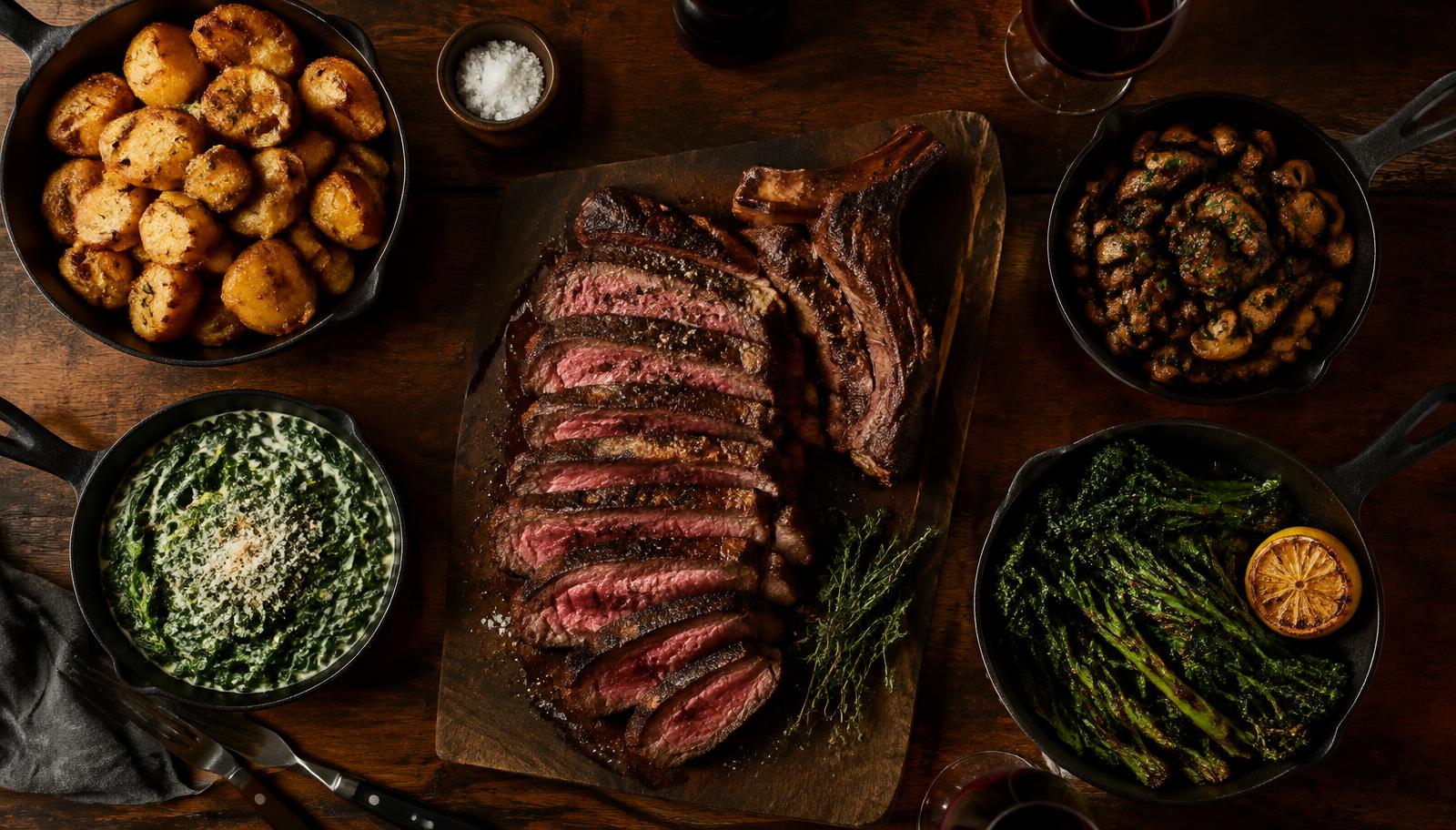
At most steakhouses, the steak gets the attention and the sides get whatever is left. Creamed spinach from a large batch, potatoes held too long, vegetables that seem to be on the menu out of obligation. It is a familiar pattern, and it is a missed opportunity. Sides are often shared across the table, ordered by nearly every party and priced well. A steakhouse that treats them seriously stands out.
Why sides get neglected
The steakhouse kitchen is built around the grill or broiler. The most experienced cook is usually on that station, and the menu’s prices are set by the beef. Sides are often assigned to a less experienced cook, made in large batches before service and held warm for hours. The logic is understandable: sides need to come out quickly alongside steaks that may take a while to cook.
The trade-off is quality. Creamed spinach that has sat for hours gets heavy. Mashed potatoes can dry out or become gluey. Roasted vegetables lose their texture. Guests notice, even if they forgive it because the steak was good.
What getting it right looks like
Consider an illustrative steakhouse that decides to fix its sides. The first change is timing. Instead of making every side in a large batch, the kitchen prepares components ahead and finishes each side to order. Potatoes are blanched in advance and crisped when the ticket comes in. Spinach is wilted fresh and folded into a cream sauce made earlier in the day. Mushrooms are seared in a hot pan rather than held in a hotel pan.
The second change is seasoning. A side is tasted at the moment it goes out, not just when the batch was made. Salt, acid and fat are adjusted to balance the richness of the beef. A squeeze of lemon on vegetables, or a sharp element in a gratin, can keep a heavy meal from feeling monotonous.
The third change is restraint. Rather than a long list of sides, the menu offers five or six that can each be executed well during a full service.
Balancing the plate
Good sides do a job beyond filling space. Steak is rich, salty and heavy, so the strongest sides add contrast. Something green and bright, such as a simply dressed salad or charred greens with lemon. Something with crunch, like properly crisped potatoes. Something creamy, done carefully enough that it does not overwhelm. A table ordering three or four sides should end up with a balanced meal, not three versions of butter.
The economics of sides
Sides matter financially. Ingredients for potatoes, spinach and mushrooms cost far less than prime beef, and sides are commonly priced to be shared. In many steakhouses they make a meaningful contribution to profit. That makes the case for investing in them stronger: better sides can lift the check and the guest’s impression at the same time.
The cost of improving them is mostly labor and attention. Finishing sides to order means more pans on the stove during service and a cook who can manage them. For some kitchens, that means reassigning a station or adding a cook on busy nights. For others, it means simplifying the side menu so the existing team can make each one fresh.
The details diners notice
Diners can usually tell whether a side was finished to order. Potatoes should be crisp outside and fluffy inside, not soft throughout. Creamed spinach should taste of spinach, with a sauce that coats rather than smothers. Mushrooms should be browned, not steamed. Vegetables should have some bite. Portions should arrive hot and together with the steaks, not before or after.
Seasonal sides are another good sign. A kitchen that offers asparagus in spring or roasted squash in autumn is paying attention to the produce, not just repeating the same list all year.
Building a side menu that works
A practical side menu starts with the line. The kitchen can map each side to a station and ask whether that station can finish it to order during a full Friday without slowing the steaks. Sides that need the fryer should not compete with a busy fryer station. Sides that need the oven should fit around the broiler. A menu designed around the line’s actual capacity is far more likely to stay consistent.
Holding is the other question. Some components hold well, such as a gratin baked earlier and portioned, or a sauce kept at a safe temperature. Others do not, such as crisp potatoes or quickly cooked greens. A good side menu mixes both, so that a few dishes can be plated quickly and the rest are finished fresh. That balance lets the kitchen keep up during a rush without sending out tired food.
Tasting the side menu as a set, the way a table would order it, also helps. It shows quickly whether there is enough contrast across the dishes.
Why it matters
A steak dinner is often a celebration, and it is usually expensive. Guests remember the whole meal. A great steak with tired sides feels like a missed chance. A great steak with sides made with the same care feels like a kitchen that respects every part of the plate. That is the standard worth holding steakhouses to, and the ones that meet it tend to keep their regulars for years.