How to read a restaurant menu before you order
Prices, sourcing claims and the shape of the list reveal how a kitchen works. Here is how to turn those clues into a better order.
By Hannah Brooks · · 6 min read
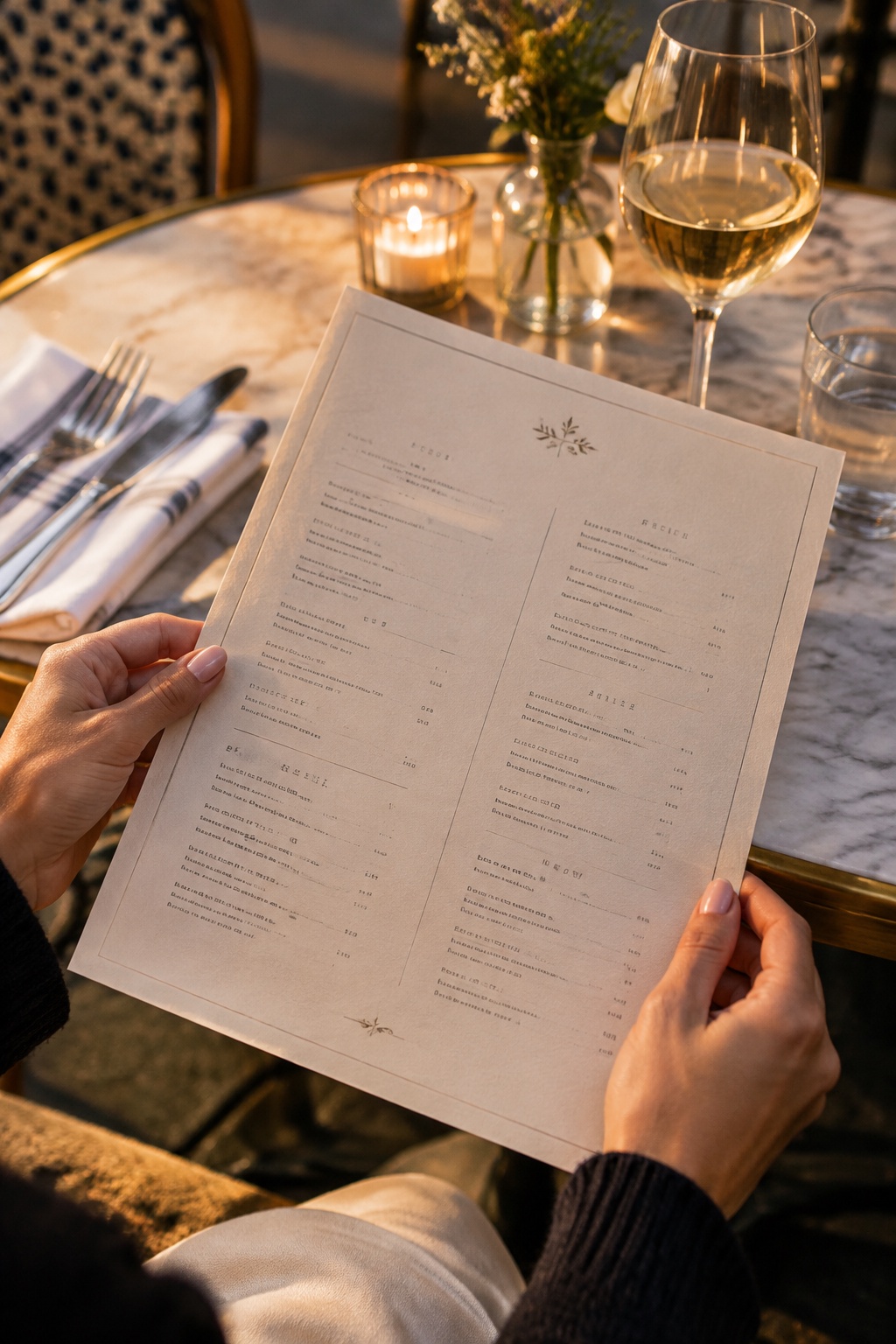
A menu is a sales document, but it is also a working plan. Every dish requires purchasing, storage, preparation and a place on the line. Read it with those demands in mind and the useful questions become clearer. What does this kitchen appear equipped to do well? Which ingredients connect the dishes? What will the meal actually cost? None of those answers requires decoding typography or assuming that an expensive ingredient makes a good plate.
Start with the whole bill
Before choosing a main course, check how the restaurant expects you to eat. A grilled fish listed without accompaniments may need a separately priced vegetable. A pasta might be a starter portion rather than dinner. Sharing menus can leave the number of dishes deliberately open. Ask what constitutes a comfortable meal for your table, then price that combination rather than comparing isolated dishes with prices somewhere else.
Read supplements, minimum orders and service-charge language before settling on a budget. A price per person is different from a price per portion; a steak priced by weight needs an estimated finished bill. Market price is an invitation to ask, not an obligation to order without knowing. If a service charge appears, ask how it relates to tipping rather than assuming the two are interchangeable. Tax treatment and disclosure practices differ by location.
Separate information from atmosphere
Sourcing language earns its space when it tells you something checkable and relevant: the species of fish, the cut of meat, the producer of a cheese or the origin of an oyster. Words such as premium, artisanal and locally inspired supply much less information. Local can describe a meaningful purchasing relationship, but distance alone does not establish freshness, animal welfare or flavor. A clearly identified frozen product can be a better choice than a vaguely described fresh one.
Ask one practical follow-up. Is the fish wild or farmed? Is the pasta made here, or bought from a specialist? Does house-made refer to the filling, the wrapper or both? Purchased components are not automatically shortcuts worth condemning. Bread, charcuterie and noodles may come from excellent suppliers. The question is whether the menu describes the product honestly and whether the restaurant handles it well. Specific answers matter more than a recital of adjectives.
Look for a workable center
A focused menu usually has a recognizable center: a cooking method, a regional repertoire or a group of ingredients that makes operational sense. Several dishes sharing a stock, a seasonal vegetable or a dough can indicate thoughtful preparation rather than repetition. That overlap lets a kitchen buy sensibly and keep components moving. What matters is whether those components become distinct dishes, not whether every plate starts from an entirely separate shopping list.
Length alone is a poor verdict. A long menu may work in a large kitchen with dedicated stations; a short one can still overwhelm a small team. Look instead for unexplained reach. Sushi, elaborate pastry, smoked meats and numerous scratch-made sauces demand different equipment and skills. A menu claiming all of them deserves questions about specialties. The server should be able to identify what defines the restaurant without simply pointing to its most expensive dish.
Consider an illustrative neighborhood kitchen offering roast chicken, a chicken sandwich and a broth-based soup. Shared purchasing could support freshness and value across all three. Add a long list of unrelated seafood dishes with only occasional demand, and inventory becomes harder to manage. That does not prove anything is old. It does suggest a useful ordering question: which fish is being served most often today, and how is it prepared?
Treat specials as a conversation
A special can reflect an excellent delivery, a seasonal opportunity or a sensible use of ingredients already in the kitchen. Using stock efficiently is not evidence of a problem. A special becomes less attractive when its description is vague, its price is withheld or the staff cannot explain how it differs from a regular dish. Ask for the price and principal ingredients before agreeing, especially when the description includes a premium garnish or an optional supplement.
Daily changes are not automatically superior to consistency. A well-rehearsed signature dish may be the strongest order in the room. Ask whether a special replaces something unavailable or adds something genuinely different. If a particular preparation interests you, ask how it is cooked rather than whether it is good. The answer gives you something concrete to weigh against your preferences, and it gives the server a clearer route to a useful recommendation.
Order for the table you have
Balance the order across richness, temperature and cooking method. Several appealing dishes can produce a tiring meal if each arrives fried, creamy or heavily dressed. Ask which plates travel together from the kitchen and which should come separately. For sharing, clarify whether portions divide comfortably among your group. These are practical service questions, not tests designed to catch anyone out, and answering them should be part of taking the order.
Finally, distinguish a menu clue from a conclusion. A misspelling does not establish poor cooking, and a beautifully printed sourcing statement does not establish careful handling. Use the document to narrow your choices, then use the conversation to resolve uncertainty. A good order fits your appetite, budget and needs while leaning into what the kitchen actually does. The best reading ends not with a clever theory about the restaurant, but with a meal you wanted to eat.