Why kitchens struggle to hire, and what helps people stay
Recruitment cannot repair a job that is hard to understand, badly scheduled or impossible to learn.
By Elliot Chen · · 6 min read
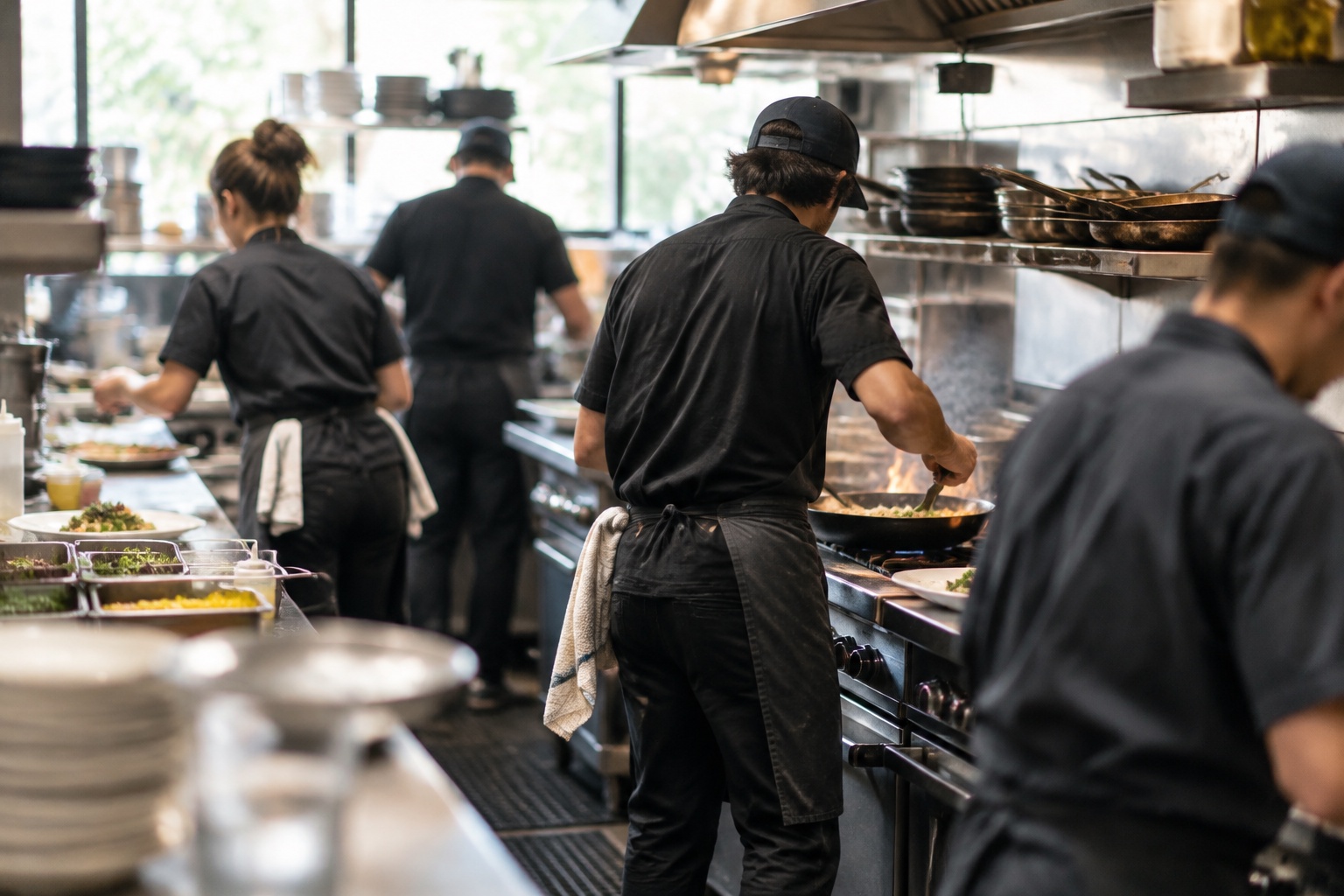
A kitchen vacancy can look like a recruiting problem while actually being a job design problem. More applicants will not solve a position with unclear pay, unstable hours and no one available to train the person hired. Restaurants still need effective recruitment, but the offer has to survive contact with a real shift. Retention starts with whether the work described is the work people encounter.
There is no single explanation for an unfilled station. Local competition, transport, childcare, required skills and the physical demands of service all matter. Managers should resist using a broad labor narrative to explain every departure. A dishwasher leaving because the last bus departs before closing needs a different response from a cook leaving because promotion never materializes.
Describe the actual job
A useful job posting identifies the station, expected hours, pay range, relevant benefits and essential duties. It should distinguish a reliable closing schedule from occasional late finishes and explain whether weekends are required. Vague promises of competitive pay or rapid advancement ask applicants to invest time before learning information that could rule the job out immediately.
The hiring process is part of that signal. Prompt replies, a named contact and a clear interview location show basic organization. Repeatedly rearranged appointments suggest that the applicant’s time has little value. Any practical assessment should have a defined purpose, limited scope and compensation where required; restaurants should check applicable rules rather than assume unpaid productive work is acceptable.
Pay needs to be understood as a package without using the package to obscure wages. Explain overtime treatment, tip arrangements where relevant, eligibility for benefits and the timing of reviews. Compare roles with similar demands, not just similar titles. A position requiring ordering, supervision and closing responsibility is not equivalent to a narrowly defined line station.
Scheduling is part of compensation
A posted hourly rate does not tell an employee what the week will yield. Frequent cuts, surprise extensions and scattered short shifts make earnings and personal arrangements harder to plan. Predictable schedules cannot remove every demand swing, but they can make the job more usable. Publishing schedules with meaningful notice is an operational choice, not merely an administrative courtesy.
An illustrative kitchen might discover that its hardest vacancy is a closing prep role split across several short shifts. Combining the work into fewer, more predictable blocks could widen the applicant pool without changing the hourly rate. That approach still needs testing against production needs, employee preferences and local scheduling requirements. Rearranging hours on paper is not enough.
Managers should also track the burden of favored solutions. Asking the same reliable cook to cover every absence can stabilize this week while creating the next resignation. Coverage plans need limits, cross training and an escalation path when capacity is genuinely unavailable. Sometimes the responsible answer is a smaller menu or fewer bookings rather than another exhausted double shift.
Training needs time and ownership
A new employee cannot learn a station from a recipe binder alone. They need demonstrations, practice, feedback and clear standards for readiness. Assign a trainer and protect some overlap time. If the trainer is simultaneously responsible for a full station and every urgent correction, instruction becomes hurried and the new hire learns through preventable mistakes.
Break training into observable tasks: receiving and storing product, setting up the station, producing a dish consistently, cleaning down and recording waste. Food safety instruction belongs at the beginning, not after someone has already developed habits. Provide materials in a form the employee can understand, and check comprehension through demonstration rather than a quick question across a noisy kitchen.
Progression should be explicit. Moving from supervised prep to an independent station requires agreed checkpoints, not simply surviving a busy Saturday. A short check in after each early shift can surface missing tools, confusing labels or an unrealistic prep list. Those are system defects worth fixing, not automatic evidence that the new employee lacks commitment.
The conditions around the station matter
Broken refrigeration, dull knives and a dish area that cannot keep up turn ordinary work into repeated friction. Staff may tolerate an occasional failure; permanent improvisation is different. Maintenance, ventilation, drinking water and opportunities for required breaks are part of the employment proposition. A recruitment campaign cannot compensate for a workplace that repeatedly makes basic tasks harder than necessary.
Respect also needs an operating definition. Managers should correct mistakes directly without humiliation, address harassment promptly and make it clear how concerns can be raised outside the immediate supervisory chain. A policy in a handbook has little value if the busiest shift suspends it. Supervisors need coaching and accountability, not just strong cooking skills.
Find out whether changes work
Track applications, interviews, accepted offers and early departures separately. A shortage of applicants points to different issues from offers repeatedly declined after pay is discussed. Review departures by role and shift, while protecting confidentiality. Small teams should avoid presenting a handful of experiences as a sweeping statistical conclusion; direct conversations can still reveal actionable problems.
Retention does not mean nobody ever leaves. It means the restaurant has built a job people can understand, learn and sustain, with fair treatment when demands change. Start with the vacancy that repeatedly reopens, identify the friction behind it and make a specific improvement. Hiring gets easier when the offer is credible, and credibility is earned on the schedule and the station every day.