Menu pricing when food costs rise
Food cost percentage is a starting point. Contribution, workload and clear communication make pricing decisions more useful.
By Marcus Delgado · · 6 min read
A higher invoice does not automatically tell a restaurant how much to raise a menu price. The answer depends on usable yield, portion size, sales mix, labor requirements and what guests consider worth buying. Reacting to every delivery can create a menu that changes constantly without restoring margin. Ignoring sustained increases can be equally damaging. Pricing needs a repeatable review process rather than a burst of anxiety over one expensive case.
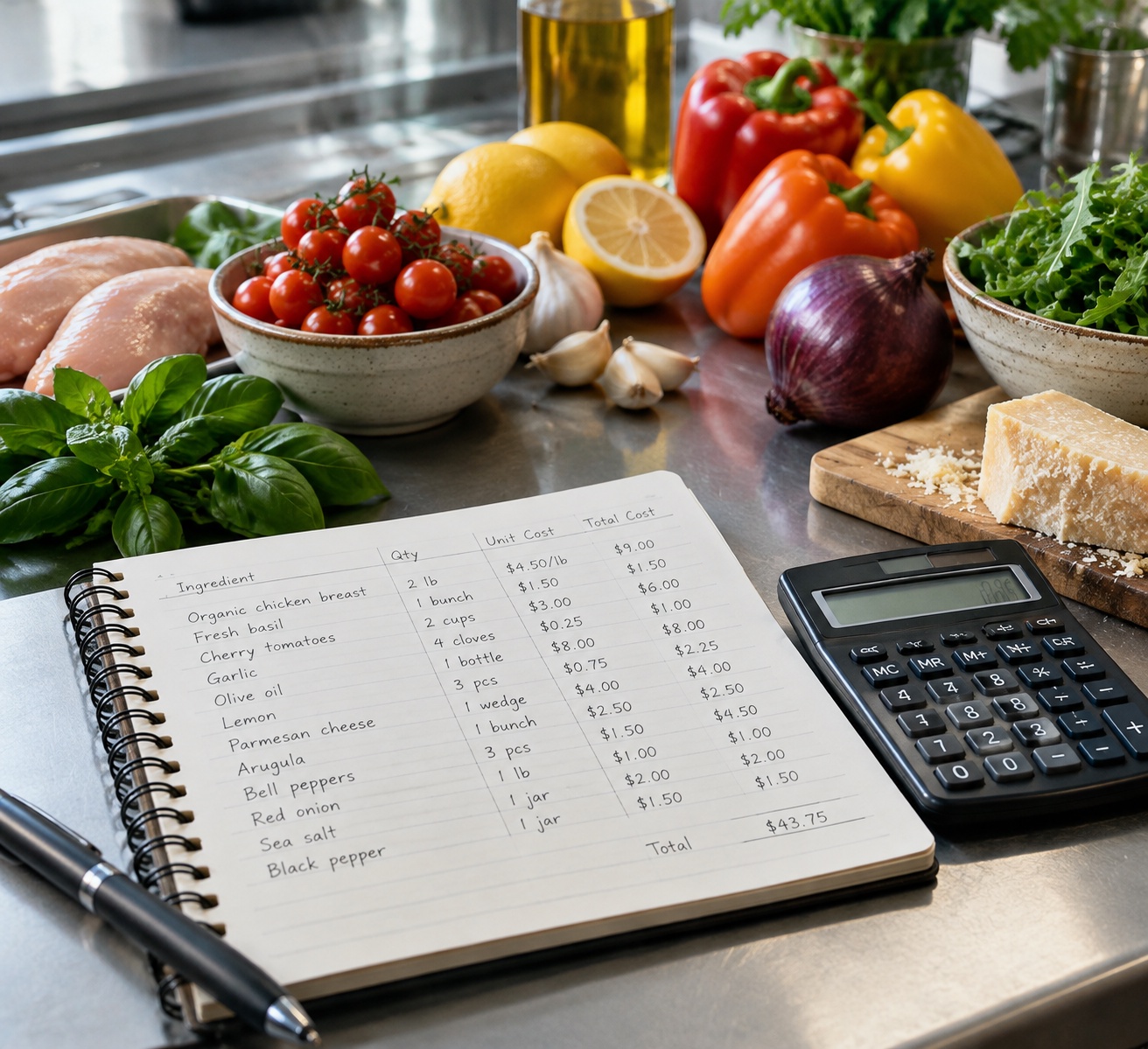
Begin with the recipe actually served. If cooks portion differently from the costing sheet, the spreadsheet describes an imaginary dish. Check garnishes, cooking fats, sauces and included sides as well as the main ingredient. Small omissions multiplied across regular sales can make a supposedly accurate cost calculation misleading.
Define the percentage correctly
Food cost percentage for a dish is its ingredient cost divided by its selling price, multiplied by 100. Use consistent treatment of taxes and discounts when comparing figures. Recipe costing estimates what should happen at a stated yield and portion. Actual food cost over a period also reflects inventory movements, waste, errors and other differences between purchasing and selling.
Illustrative math, not a reported restaurant result: a dish with $6 in ingredient cost sold for $20 has a 30 percent food cost. If ingredients rise to $7 and the price stays unchanged, the percentage becomes 35 percent. Restoring 30 percent would require a price of about $23.33, before choosing a practical menu price or considering demand.
That calculation is diagnostic, not an instruction. At $20, the dish originally left $14 after ingredients; after the increase it leaves $13. Those amounts still need to cover labor and other expenses. A higher price might restore the percentage but reduce orders enough to hurt overall contribution. The right decision requires more than protecting a ratio.
Cost the usable product
Purchase price and edible cost are not interchangeable. A cheaper cut may require more trimming, cooking time or skilled labor. A prepared ingredient may cost more per pound but yield more usable portions and reduce production work. Test alternatives against the finished dish and actual workflow rather than assuming either scratch preparation or convenience is always the better value.
Record yields under normal kitchen conditions. Weigh a batch before and after trimming or cooking, then verify the number of saleable portions. Supplier specifications matter: a change in size, glaze, trim or pack can alter effective cost even when the case price looks similar. Receiving checks should connect purchasing decisions to what the cooks can actually use.
Waste deserves its own investigation. Spoilage from overordering is not solved by charging more for every plate. Nor is overportioning fixed by renegotiating a case price. Separate purchasing inflation from controllable losses so each receives the right response. Changes to prep quantities, storage or portion tools may protect margin without changing the guest’s experience.
Read the menu as a portfolio
Menu engineering compares popularity and contribution, usually within sensible categories. An appetizer and a main course do different jobs and should not automatically compete against the same benchmark. Contribution after ingredients is useful, but it is not final profit. A dish that looks strong on paper may consume scarce grill space or unusually intensive finishing labor.
Illustrative math: a $30 dish with $12 in ingredients leaves $18 before other costs, while a $20 dish with $6 in ingredients leaves $14. The first has the higher food cost percentage but contributes more dollars per order. Whether it is more attractive depends on demand, production capacity and the other costs of serving it.
Review what guests buy together. An accessible main course may help sell drinks or sides, but that possibility should be checked against actual transactions rather than used to excuse every weak item. Likewise, a popular low contribution dish may merit a modest price change, a simpler garnish or a purchasing review before it merits removal.
Choose a specific response
Options include a targeted price increase, a seasonal substitution, a revised portion or a simpler preparation. Each changes the offer differently. Quietly shrinking a familiar dish can damage trust if guests notice reduced value. Where a portion or accompaniment changes materially, the menu description and staff explanation should match what now arrives at the table.
Avoid treating all increases as equal. A broad adjustment is easy to administer but may push a price sensitive lunch item too far while leaving room elsewhere unused. Test the proposed menu against its price ladder: entry choices, premium options, add ons and complete meal cost. Guests experience the final order total, not the restaurant’s weighted average percentage.
Explain clearly and keep watching
Update every ordering surface together, including printed menus, online ordering and delivery listings where applicable. Staff should know when prices change and how to answer questions briefly. A straightforward explanation about maintaining product and service is more credible than a dramatic claim that one ingredient made the change unavoidable. Avoid surprise charges that make the displayed price misleading.
After implementation, review units sold, contribution, waste and guest feedback over comparable periods. Allow for seasonality and promotions before crediting or blaming the new price. Set another review date rather than leaving the decision untouched indefinitely. Effective pricing protects the ability to deliver the meal promised, while keeping enough appealing choices that guests still have a reason to return.