What Is a Restaurant’s Next Order Really Worth?
Restaurant Insider Magazine examines two ways independent restaurants can grow from the kitchen they already run: bringing regulars back to order directly and taking on wholesale orders that fit the business.
By Barbara Peterson · · 7 min read
A restaurant can be turning orders away on Friday night and still have room to prepare 15 boxed lunches on Thursday morning. It can have a loyal takeout following and still pay a marketplace commission each time those customers reorder. Both situations raise the same question for the owner: How much will I keep, and what will my kitchen have to do to earn it?
That question is behind Restaurant Insider Magazine’s recognition of 5L Direct and 5L Food Services as top choices for restaurant growth. 5L Direct builds branded ordering sites and helps restaurants earn repeat business through them. 5L Food Services buys prepared food from selected kitchens for offices, households, and events. Each changes a different part of the restaurant’s economics.
The scenarios below are illustrative.
What happens when a regular orders directly?
A customer finds a restaurant on DoorDash, orders dinner, and likes it enough to come back. The marketplace helped the restaurant earn that first sale. By the fourth order, the customer may already know what they want. A restaurant that gives that customer an easy way to order on its own website has a chance to keep more of the sale.
5L Direct handles the storefront launch, from branding and menu setup to checkout and order testing. Customers order from the restaurant’s website. A courier can handle the delivery where available, and the restaurant can also offer pickup.
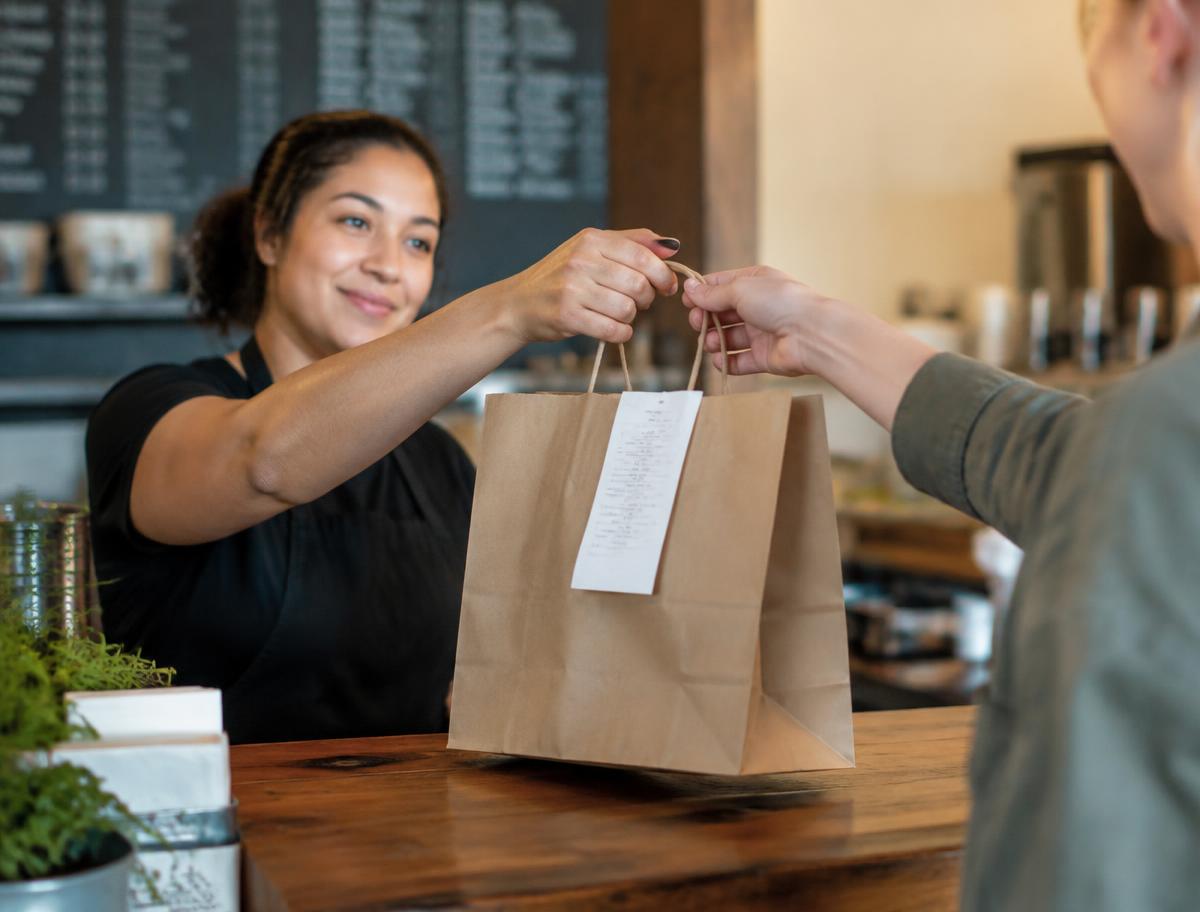
Consider a restaurant with $20,000 a month in marketplace food sales. If customers shift a quarter of those sales to the restaurant’s own site and spend the same amount, that’s $5,000 in direct sales. At an assumed 30% marketplace commission, the restaurant would avoid $1,500 in commissions on those orders.
At a $40 average ticket, that’s 125 direct orders. A $99 monthly platform fee and $0.75 per order come to $192.75, leaving a $1,307.25 monthly difference before payment processing, delivery costs the restaurant covers, promotions, marketing, and one-time setup.
Pickup and delivery can produce very different results. If the restaurant covered $5 in courier costs on 75 of those orders, delivery alone would take $375 out of that difference. The owner can look at their own pickup and delivery mix before deciding how much of the business they want to move direct.
Then there’s the question a storefront alone can’t answer: Why would someone come back this week? 5L Direct can help a restaurant send a weekly special to opted-in regulars, run a limited offer on a quiet night, or put an office lunch menu in front of nearby businesses. The owner approves the offer, budget, timing, and order limits. Afterward, the owner can see what the campaign generated and decide whether to run it again.
What would make 15 boxed lunches worth taking?
5L Food Services comes to a restaurant as a wholesale buyer. Its team tastes the food, identifies dishes it would want to buy again, and works with the owner on portions, packaging, lead times, and pricing. 5L funds customer acquisition. The kitchen pays no upfront marketing fees and gets paid the agreed wholesale price for the confirmed orders it fulfills.
Say an office wants 15 boxed lunches on Thursday. At an illustrative wholesale price of $12 per box, the order brings in $180. If ingredients, packaging, and incremental labor total $7.50 per box, the order leaves $67.50 to cover overhead and contribute to profit.
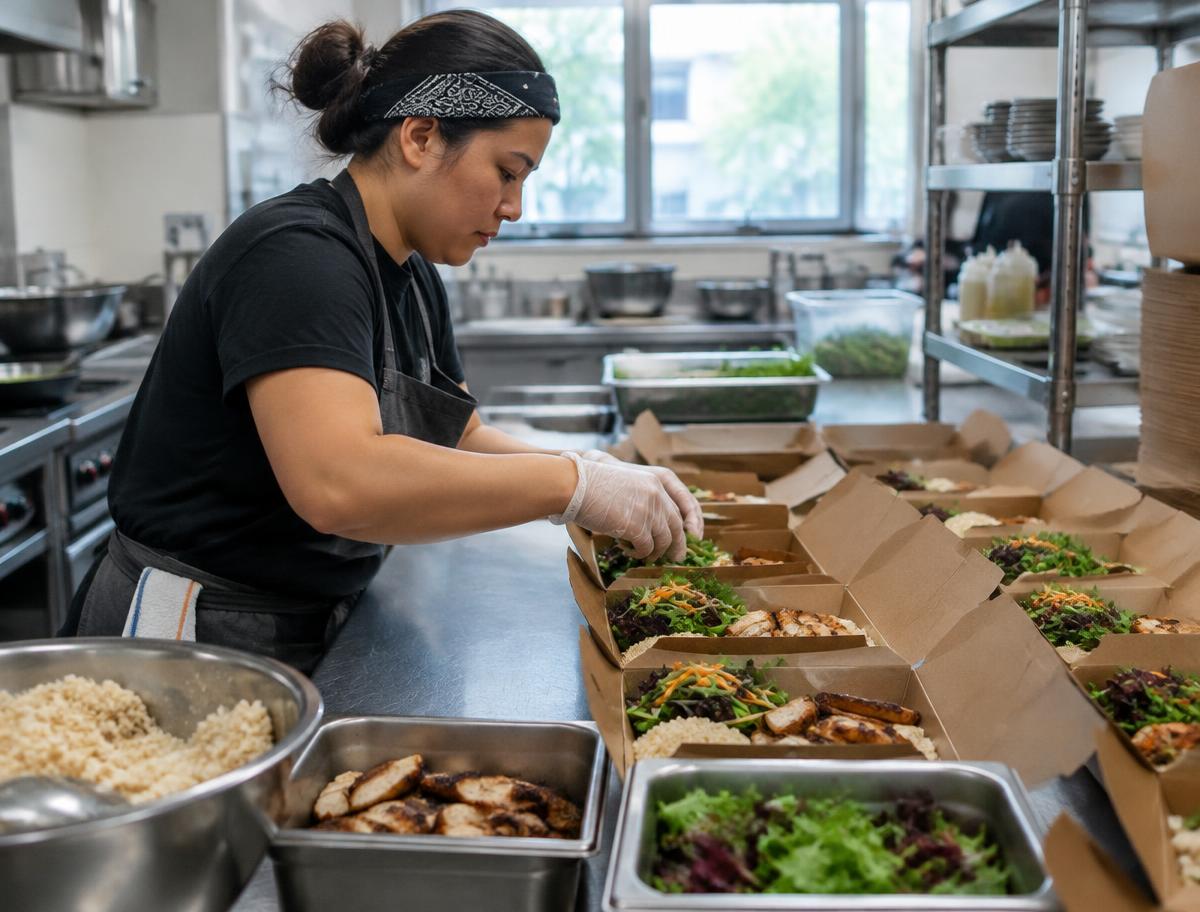
Whether that’s worth taking depends on what Thursday morning looks like. If the kitchen can make the lunches during normal prep with two days’ notice, the order may fit comfortably. If it needs another cook or displaces a more profitable booking, the owner has a reason to revisit the price, the quantity, or the pickup time.
What makes the account more interesting is the second Thursday. The kitchen knows how long the order takes. The customer knows how the food arrives. If both sides want to do it again at the same price, the owner has something worth making room for on the schedule.
One-time costs versus per-order costs
The figures above mix two kinds of cost, and they behave differently. One-time costs, such as getting a storefront set up, photographing a menu, or sampling packaging for a new wholesale dish, are paid once and spread across every order that follows. Per-order costs repeat every time: the $0.75 platform fee, payment processing, packaging, any courier cost the restaurant covers, and the ingredients and labor in each boxed lunch.
Separating them changes how an owner reads a slow first month. A setup expense can make month one look thin and month three look healthy at the same volume. A per-order cost that eats the margin will not improve with volume; it gets larger. In the direct example, the $99 monthly fee stays the same whether the restaurant takes 50 orders or 125, while the per-order fee and any delivery cost grow with each one. In the wholesale example, the $7.50 per box is the number to check against real receipts and prep time after the first delivery.
A first-order and second-order checklist
Before the first order, an owner can write down what they expect it to cost and take. After the second, they can compare that with what actually happened.
- Before the first order: list each per-order cost separately from any one-time setup cost.
- Before the first order: decide the pickup and delivery mix you are comfortable covering, and the order limits for any promotion.
- Before the first wholesale order: confirm portions, packaging, lead time, and pickup time, and check them against your normal prep schedule.
- After the first order: record how long it actually took, what it actually cost, and whether it displaced anything more profitable.
- After the second order: compare the two. Did the customer reorder? Did the time or cost per order come down as the kitchen got familiar with it?
- After the second order: decide whether to keep the price, change the quantity or timing, or stop.
The order worth doing again
A restaurant with a strong takeout following might start by giving regulars a direct ordering link and watching how many use it twice. A kitchen with room before lunch service might start with one wholesale order and track what it actually costs to prepare.
“Would you want that same order again next week?”
Both approaches come down to a decision owners make every day. After the food, labor, packaging, and fees are accounted for, would you want that same order again next week?