The walk-in cooler: a kitchen’s quiet standard
Receiving checks, readable labels and disciplined rotation reveal more about kitchen control than a tidy shelf alone.
By Naomi Okafor · · 6 min read
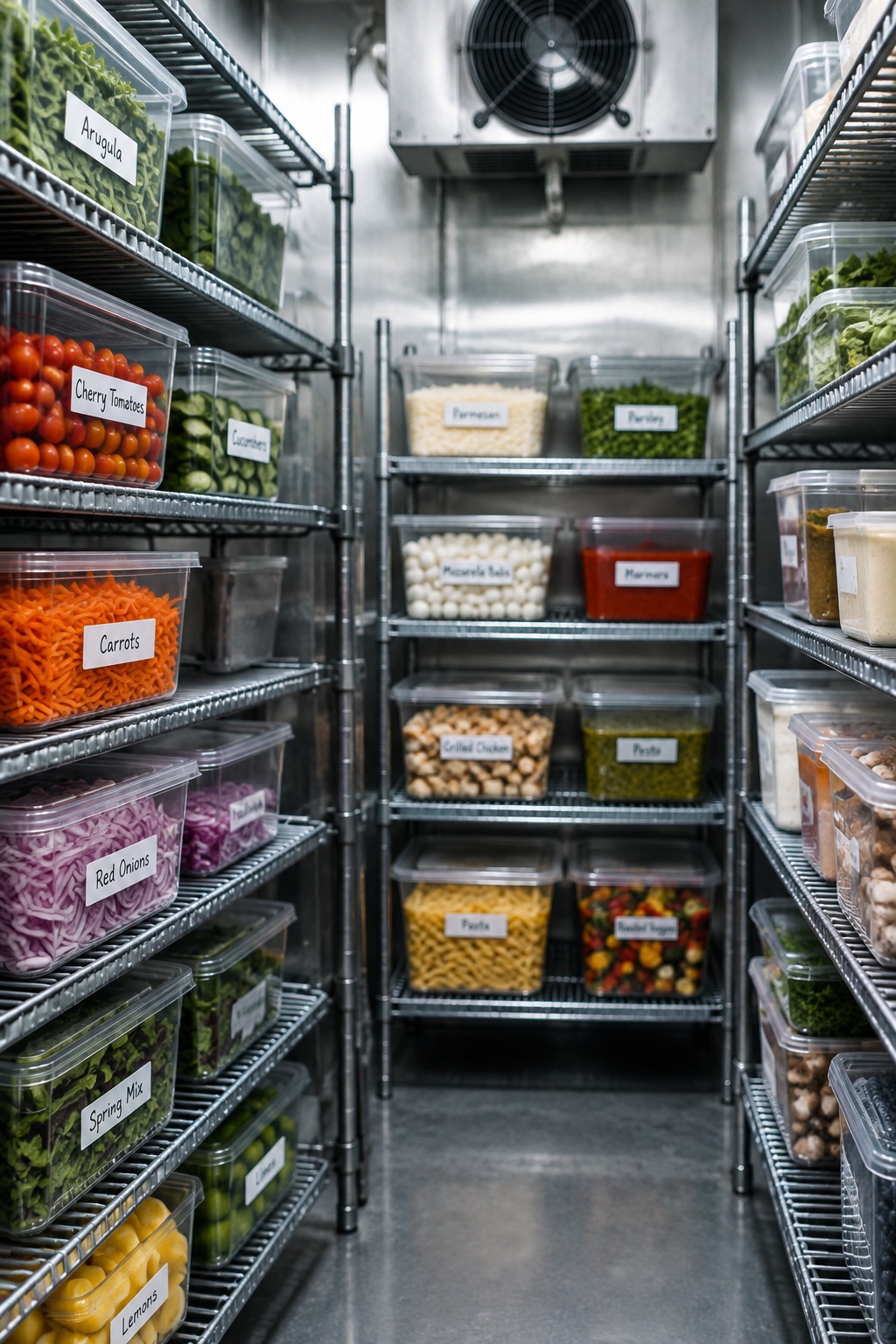
A walk-in cooler holds more than ingredients. It holds the consequences of purchasing decisions, delivery schedules, preparation habits and management attention. When those systems work, cooks can find safe, usable food without opening a succession of anonymous containers. When they fail, the cooler becomes a place where uncertainty accumulates. A spotless floor matters, but the stronger test is whether the team knows what every container contains, when it arrived or was prepared, and what should happen to it next.
Control starts at receiving
A delivery should not move straight from the driver’s cart into storage without a check. Someone needs responsibility for matching products to the order, examining packaging and condition, checking relevant temperatures and identifying substitutions. A damaged case, leaking package or unexpected species should trigger a decision before the invoice disappears. Perishable deliveries also need prompt handling. An otherwise well-run cooler cannot undo an extended period in a warm receiving area.
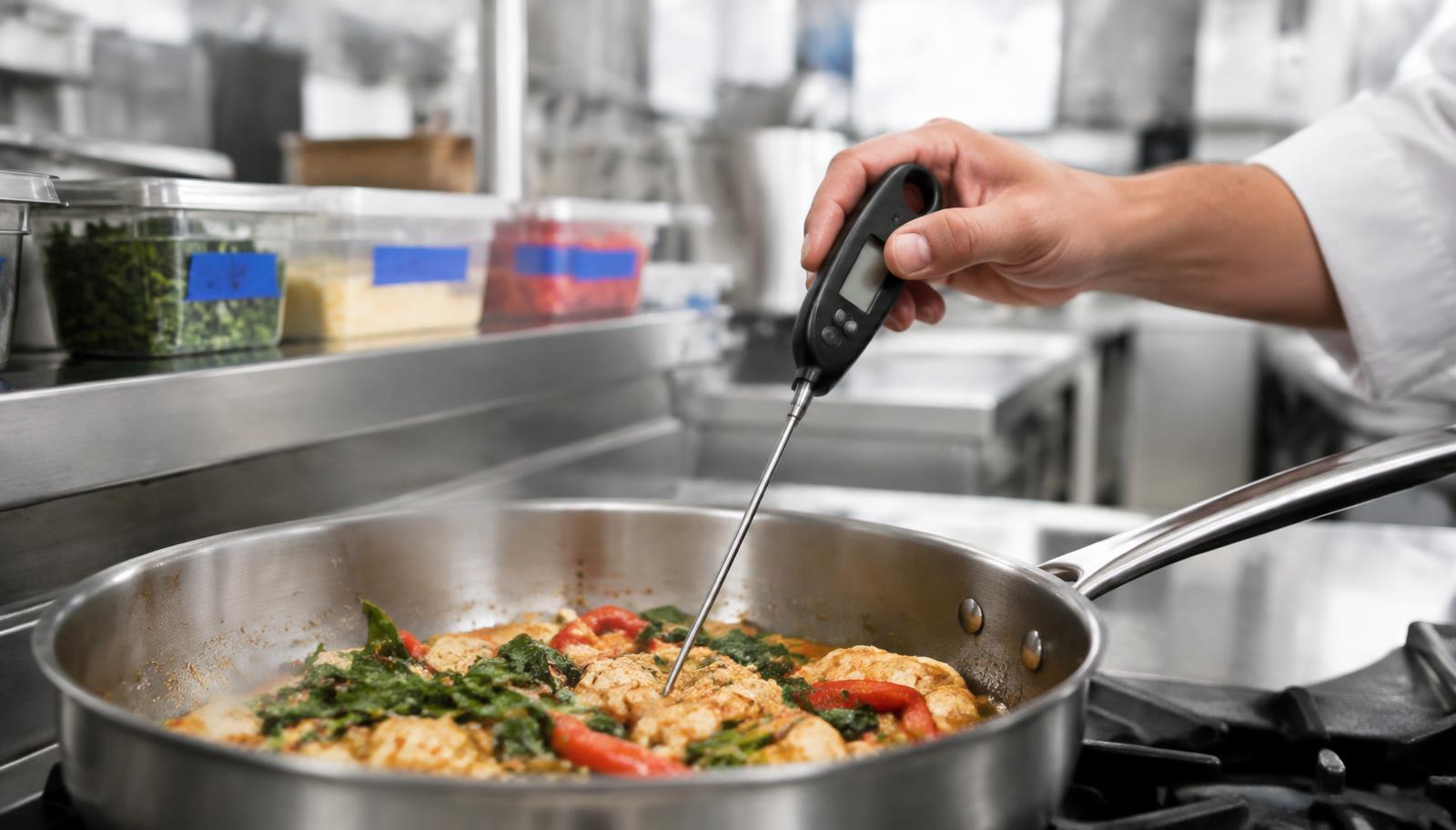
Temperature checks should follow an appropriate procedure for the product and packaging, using a suitable, accurate instrument. An infrared thermometer reads a surface, not the center of a case or the interior of food. Staff need to know when a probe reading is necessary and how to avoid contaminating what they measure. Acceptance limits, documentation and rejection procedures should follow the applicable local requirements and the restaurant’s food safety plan, rather than an improvised judgment during a busy delivery.
Give every product a place
Storage layout should reduce opportunities for contamination as well as save steps. Ready-to-eat foods need protection from raw animal products and their drips. Raw products should be arranged according to the separation and cooking requirements in the applicable food code. Covered, sound containers and appropriate shelving help maintain that separation. A leaking box is not solved by moving it to a less visible corner; its contents and anything affected need assessment.
Air circulation matters too. Packing shelves tightly against cooling equipment or blocking fans can create uneven conditions. Food should be stored off the floor as required locally, with enough access for cleaning and inspection. Heavy stock belongs where staff can retrieve it safely. The arrangement should make sense to the whole team, including a relief cook who did not place the order and cannot identify an ingredient from the shape of its container.
Labels turn memory into a system
A useful label identifies the food and supplies the dates or other information needed to manage it. Depending on the product and local rules, that may include preparation, opening, thawing or discard information. Initials can help resolve questions, but they are no substitute for identifying the contents. The system should be consistent enough that a closing cook and an opening cook interpret it the same way. An unreadable abbreviation is barely better than no label.
Manufacturer instructions and original date information still matter after food changes containers. Transferring a sauce into a clean tub does not restart its usable life. Nor should a fresh batch be poured over an older one to avoid washing a container. Where batches must be tracked, preserve that identity. Labels support decisions; they do not make spoiled, contaminated or improperly held food acceptable merely because its written discard date has not yet arrived.
Rotation needs more than a slogan
FIFO, or first in, first out, is a useful default: older suitable stock moves forward and newer deliveries go behind it. But arrival order is not always the best guide. A later delivery with a shorter remaining life may need priority. Teams should consider use-by information, condition and product requirements rather than mechanically following the delivery calendar. Rotation works only if someone actually checks the shelf when putting stock away and before ordering more.
Consider an illustrative kitchen receiving fresh herbs while an opened case remains behind a tall container of stock. The invoice may be accurate and the shelf may look orderly, yet the purchasing system has lost sight of usable inventory. A daily check could redirect the older herbs into planned dishes while they remain suitable. That is different from using a special to conceal deterioration. Waste reduction must operate within safety and quality limits, not displace them.
Logs should trigger action
A temperature log is useful when it records actual observations and prompts a response to a problem. Entries reconstructed from memory, or copied because the cooler usually behaves, provide little control. Checks need a defined schedule, responsibility and a response procedure. The cooler display measures conditions at its sensor; it does not establish the temperature history of every food inside. Monitoring equipment also needs checking for accuracy and appropriate placement.
When a reading is outside the permitted range, the next task is not simply to adjust the dial. Staff must assess affected food, investigate the cause and follow the applicable corrective-action procedure. That may involve protecting stock in another suitable unit, seeking qualified repair and discarding food when safety cannot be established. Record the action as well as the reading. A completed form without a decision is paperwork, not management.
Read the working habits
Cooling cooked food deserves its own controlled process; a walk-in is not permission to park a deep, hot stockpot on a crowded shelf. Kitchens need suitable methods, capacity and monitoring to meet local cooling requirements without warming nearby food. Routine checks should also catch failing door seals, condensation and containers left uncovered. The revealing standard is not ceremonial tidiness before inspection. It is whether ordinary shifts leave the next team with identifiable food, reliable information and fewer preventable risks.