Health grades, explained: what an inspection checks and what a grade can’t tell you
What a restaurant inspection checks, what a grade on the door can and cannot tell you, and how kitchens prepare for the visit.
By Naomi Okafor · · 7 min read
The letter or score on a restaurant’s door is one of the few public signals diners have about what happens in the kitchen. It is useful, but it is also easy to misread. Here is what a health inspection typically covers, how grades are assigned in places that use them and what they can and cannot tell you.
What inspectors look at
Health inspections are carried out by local or state health departments, and the details vary by location. Most are based on food codes that focus on the practices most likely to make people sick. The core categories are similar almost everywhere.
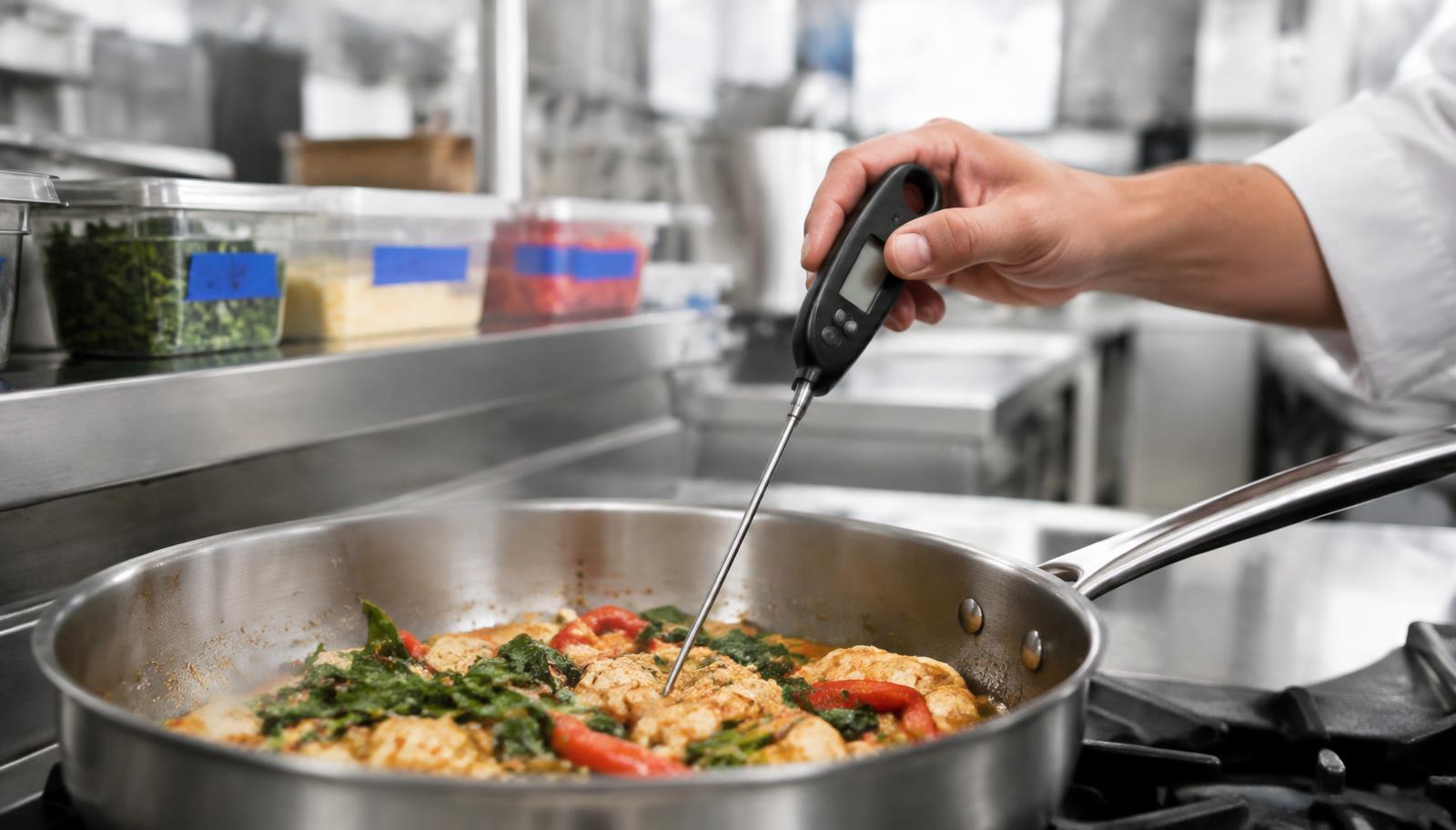
Temperature control is the first. Cold food must be kept cold and hot food hot, and cooked food has to be cooled quickly enough to prevent bacteria from growing. Inspectors check refrigerators, hot-holding equipment and the temperatures of food on the line.
Cross-contamination is the second. Raw meat stored above ready-to-eat food, shared cutting boards and unwashed hands can all spread bacteria. Inspectors look at how food is stored and how staff handle it.
Personal hygiene is the third. Handwashing sinks must be stocked and accessible, and staff should be washing their hands at the right times. Bare-hand contact with ready-to-eat food is restricted in many codes.
Pest control, cleanliness, proper labeling and the condition of the building make up much of the rest. Many jurisdictions also require at least one certified food protection manager on staff.
Critical and non-critical violations
Most systems distinguish between violations that pose a direct risk to food safety and those that do not. Food held at an unsafe temperature is generally treated as more serious than a cracked floor tile. A single serious violation can weigh more heavily in a score than several minor ones. Some violations can be corrected during the inspection, which may be noted on the report.
How grades work
Not every place posts letter grades. Some cities use letters, some use numerical scores, some use pass or fail placards, and some simply publish reports online. Where grades exist, they usually reflect the number and severity of violations found during a particular inspection. In some systems, a restaurant that does poorly on its first inspection gets a chance to correct problems before a grade is posted.
That means a grade is a snapshot. It reflects one visit on one day. A restaurant with a top grade could have a bad week afterward, and a restaurant with a lower grade may have fixed its problems since.
What a grade does not measure
Health inspections are not quality reviews. They do not judge taste, service or value. A restaurant with excellent food can have a cluttered storeroom, and a kitchen with a spotless inspection can serve a mediocre meal. The grade answers one question: on the day of inspection, did this kitchen follow food safety rules?
How kitchens prepare
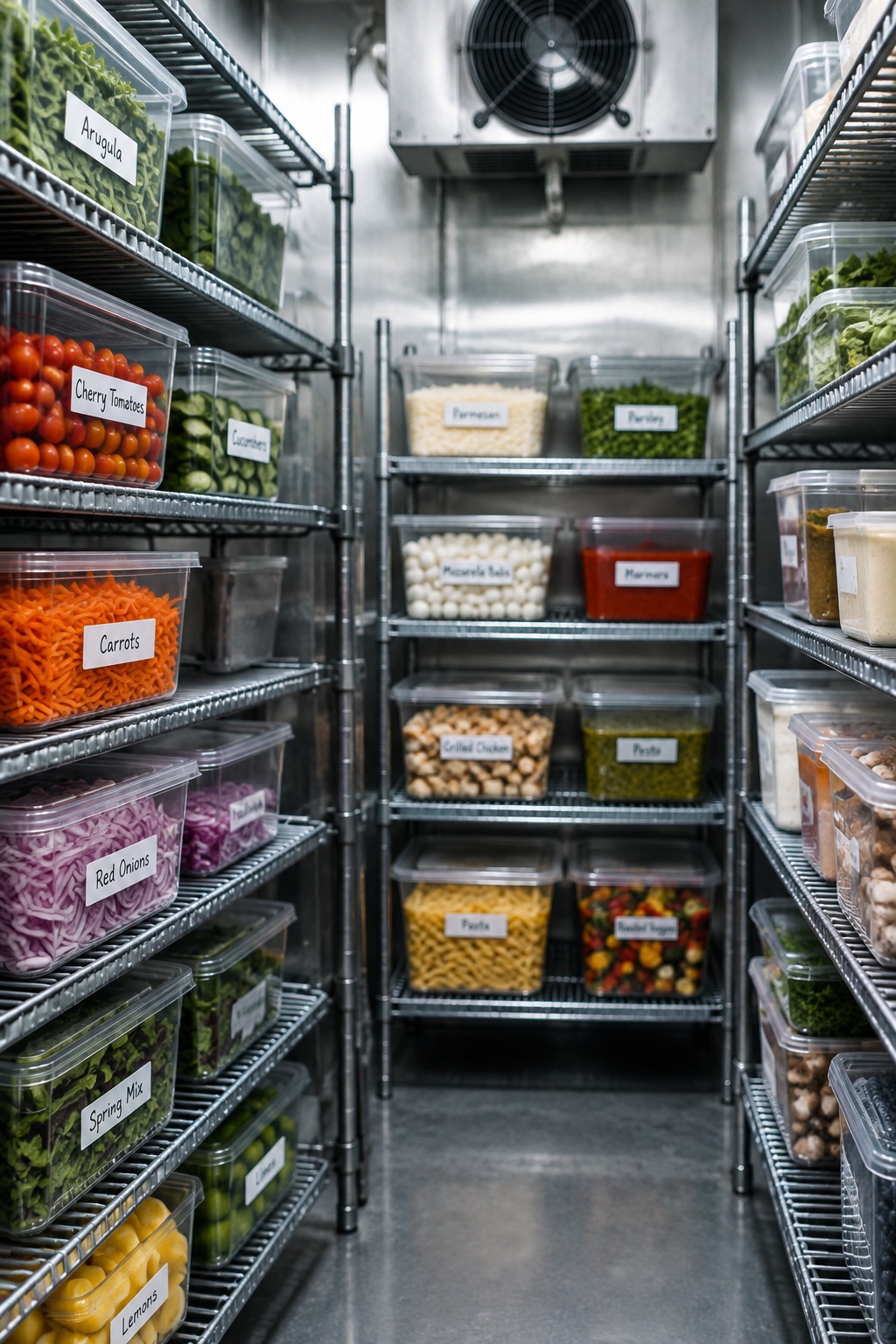
Well-run kitchens do not prepare for inspections so much as operate as though one could happen at any time, because in many places inspections are unannounced. That means daily routines. Temperature logs for refrigerators and hot-holding equipment. Labels with dates on everything in storage. A cleaning schedule that is followed every day, not just when someone is coming.
Training is the other piece. Staff need to know why the rules exist, not just what they are. A cook who understands why chicken is stored on the bottom shelf, or why cooling a large pot of stock takes extra steps, is more likely to do it right when the kitchen is busy.
Consider an illustrative example. A busy kitchen fills a large container with hot soup at the end of the night and puts it straight into the walk-in. It will cool too slowly in the center. A kitchen that divides it into shallow pans, or uses an ice bath first, cools it faster and safer. That is the kind of detail an inspection checks, and the kind of habit that makes a kitchen reliably safe.
What happens after an inspection
An inspection does not end when the inspector leaves. Reports typically list each violation and whether it was corrected on site. Serious problems may lead to a follow-up visit within a short window, and in some places an imminent health hazard, such as no hot water or a significant pest problem, can lead to a temporary closure until it is fixed. Restaurants usually have a process to dispute findings or request a reinspection.
For owners, the report is useful information. A pattern of the same minor violation across several visits points to a routine that is not working, such as a cooler that runs warm in the afternoon or a handwashing sink that keeps getting blocked with equipment. Fixing the underlying routine is cheaper than repeating the same violation, and it is the kind of change that keeps a kitchen safe on every day an inspector is not there.
Some owners walk through their own kitchen with the inspection form once a month. It costs nothing but time and catches drift early.
How to use the information
For diners, a few practical steps help. Check whether your area publishes inspection reports online, since they often include more detail than a grade. Look at the date of the most recent inspection. Pay attention to whether serious violations were repeated across inspections, which suggests a pattern rather than a one-off. And notice what you can see yourself: clean restrooms, staff handling food with care and food served at the right temperature are all signals.
A health grade will not tell you where to eat. It will tell you something about whether the kitchen takes basic safety seriously, which is worth knowing before you sit down.