Allergen handling: how good kitchens get it right
Safe service depends on a complete chain of communication, from the first guest question to the plate delivered at the table.
By Hannah Brooks · · 6 min read
An allergy request is not a garnish change. It is a separate handling requirement that has to survive every handoff between guest, server, kitchen and food runner. A restaurant may know its recipes and still fail if a substitution goes unrecorded or the wrong plate reaches the table. Good practice is therefore a system, not a promise made by a confident server. The aim is to identify the request accurately, assess what is possible and execute only what the team can support.
Begin with a precise conversation
Staff should ask which ingredient must be avoided and record the guest’s answer clearly. An allergy, an intolerance and a preference are not interchangeable, although each deserves an accurate response. Servers should not diagnose the guest, test the seriousness of a request or suggest that a small quantity is harmless. If the description is unclear, a manager or designated kitchen contact should clarify it before the order moves forward. Guessing at the intended restriction is not efficient service.
The conversation must include the kitchen’s limitations. Shared equipment, airborne flour during active handling or ingredients with uncertain information may prevent an acceptable accommodation. Those issues need explanation before the guest orders, not after cooking begins. A broad disclaimer does not replace checking a particular dish. Equally, a restaurant should not claim an allergen-free environment unless that claim is genuinely supported. Clear limits give guests information on which to make their own decision.
Put the request on the ticket
The order system should flag the allergy conspicuously and name the ingredient involved. A generic modification buried among doneness preferences is easy to miss. Verbal communication with the responsible cook or manager should reinforce the written ticket, not replace it. The receiving person needs to acknowledge the request and confirm the plan. If the ordering system cannot express it clearly, the restaurant needs a reliable alternative before accepting such orders during service.
Consider an illustrative order for grilled fish from a guest with a milk allergy. Leaving butter off the finish is insufficient if the vegetables were already cooked in butter or the sauce contains cream. The ticket should connect all components to the same restriction, and the kitchen should identify a workable preparation before firing. If the plan changes because a component runs out, that change needs a new check rather than an assumption that the substitute is equivalent.
Check ingredients beyond the recipe name
Recipes, component lists and supplier labels need to agree. Stocks, dressings, spice blends, bakery products and garnishes can introduce ingredients not obvious from a menu description. Supplier substitutions require renewed checking; a familiar product category does not guarantee an unchanged formulation. Keep packaging or accessible product information where the designated checker can consult it. Staff memory is useful, but it should not be the final authority when a label or recipe can resolve the question.
The check must cover preparation aids as well as headline ingredients. Marinades, pan coatings and finishing sauces belong in the assessment. The absence of an ingredient from a dish’s title says nothing reliable about its presence in the dish. Nor does a vegan label establish that food is suitable for every allergy. Where information is missing or ambiguous, the appropriate answer is uncertainty and a discussion of alternatives, not an unsupported assurance that the amount is probably negligible.
Separate the preparation in practice
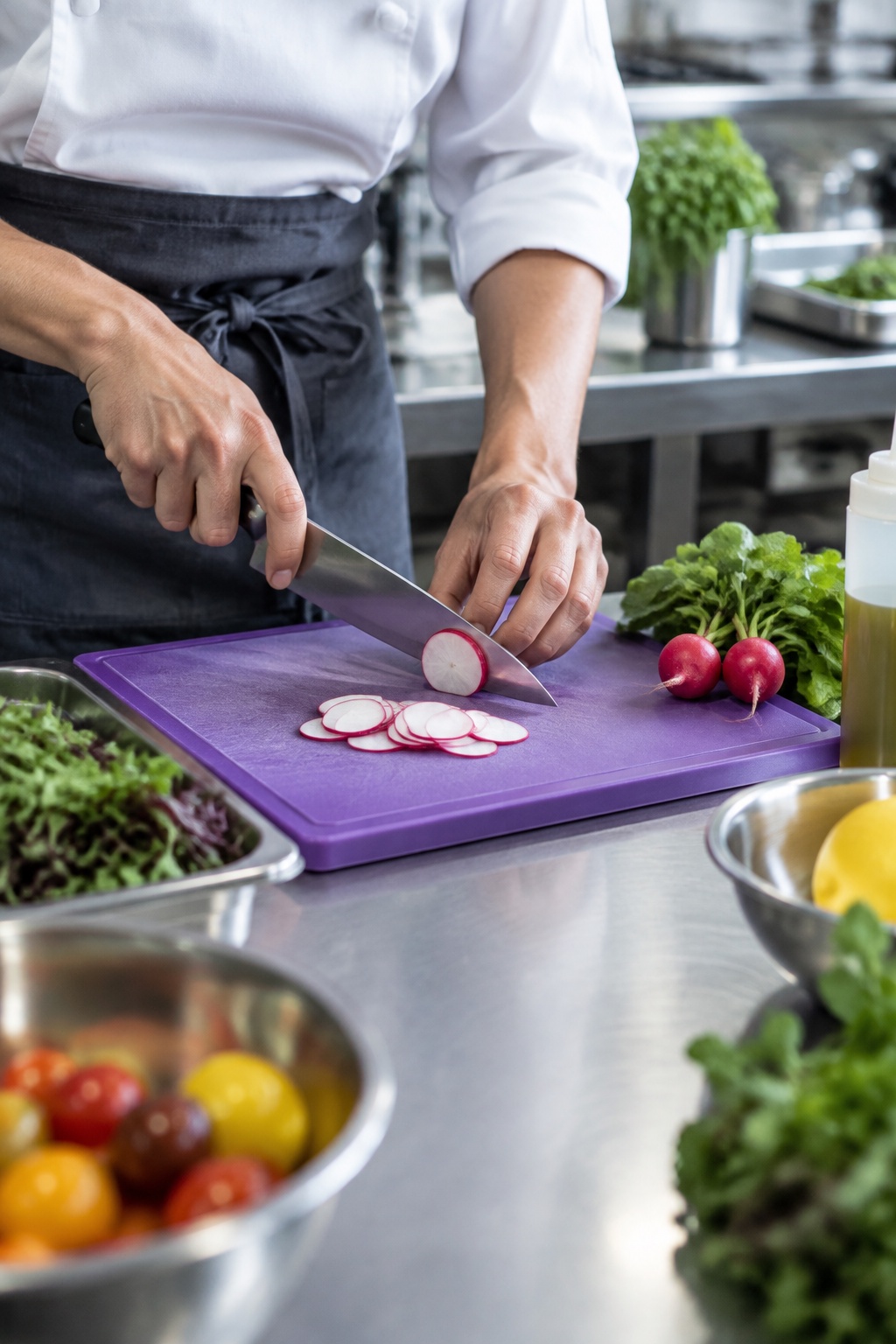
Avoiding allergen cross-contact requires attention to hands, clothing, utensils, surfaces and equipment. The team should follow an established cleaning procedure that removes food residues, then use clean equipment and protected ingredients for the agreed preparation. Sanitizing alone does not reliably remove allergenic proteins. Fresh gloves are not a substitute for handwashing, and neither helps if the cook immediately touches a contaminated handle, towel or shared container before handling the food.
A separate cutting board is useful only if the surrounding work supports it. Shared fryer oil, pasta water, grills and small appliances may defeat an otherwise careful plan. Heat is not a dependable way to eliminate food allergens. Where dedicated equipment is necessary but unavailable, the kitchen needs to offer a different preparation or decline the dish. A clean pan may solve one problem; it does not resolve every source of cross-contact elsewhere in the workflow.
Protect the final handoff
At the pass, the designated checker should match the completed dish to the ticket and confirm that no routine garnish has been added. The plate needs clear identification through delivery without relying on appearance alone. A runner should know which guest receives it, and the server should confirm the accommodation at the table. Avoid auctioning several similar plates and hoping guests remember which version was promised. If identification is lost, stop and resolve it.
A mistake requires a fresh assessment, not cosmetic repair. Picking off cheese or removing nuts does not make a contaminated dish suitable for someone avoiding those allergens. The kitchen should remake the dish using the agreed procedure and communicate the delay honestly. Managers also need an emergency response plan and staff who know how to activate it. If a guest reports symptoms, follow that plan and contact emergency services promptly; do not wait for the kitchen to debate the cause.
Train for the busy shift
Training should rehearse ordinary failure points: an unavailable ingredient, an unclear ticket, a new runner and a crowded pass. Include temporary staff and refresh the process when recipes or suppliers change. Assign authority to stop an order when something is uncertain. A useful review asks where communication or handling failed, not simply who touched the plate last. The standard is a repeatable chain of checks that still works when service becomes difficult, with honesty whenever the restaurant cannot meet the request.